Replacing Traditional ANSI Flanges in Refinery High-Pressure Line
Refineries are unforgiving environments. The combination of high operating pressures, elevated temperatures, corrosive process fluids, and continuous thermal cycling creates conditions that push every component in a piping system toward its limits. Among those components, the flanged connection has historically been one of the weakest points, and in refinery high-pressure lines, a weak point is something no facility can afford to carry indefinitely.
The conversation around ANSI flange replacement in refinery pipelines is no longer theoretical. For facilities that have tracked the true cost of gasket failures, unplanned shutdowns, and recurring maintenance across their flange population, the case for switching to a better connection system is already well made.
What Makes Refinery Service So Demanding
A refinery process line is not a stable environment. Pressures fluctuate with throughput changes. Temperatures spike during upsets and drop during shutdowns. Process fluids carry corrosive compounds that attack sealing surfaces and flange faces over time. Vibration from pumps, compressors, and flow-induced turbulence works continuously at bolt load.
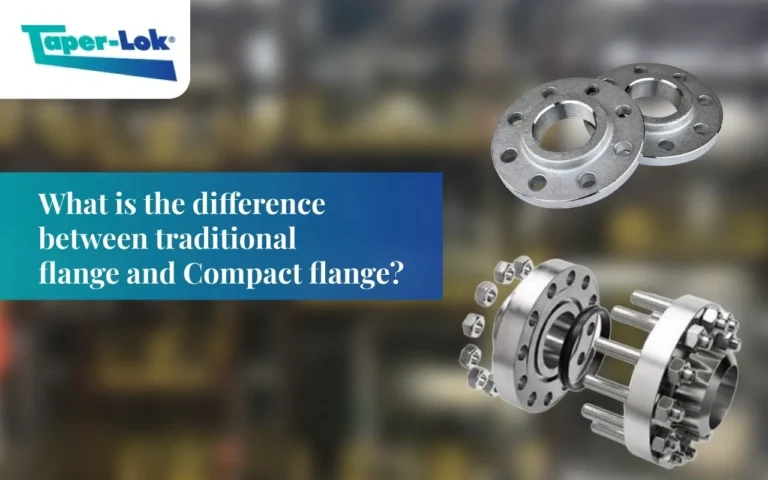
Standard ANSI flanges were not designed with this combination of stressors in mind. They were designed for general industrial service, and they perform adequately in moderate conditions. In refinery high-pressure lines, however, moderate performance is not enough. Oil and gas pipeline flanges in critical service need to hold reliably across thousands of pressure and temperature cycles without requiring intervention between scheduled shutdowns.
ANSI flanges in that environment consistently fall short. Not because they are poorly made, but because their fundamental design relies on a gasket that was never going to survive indefinitely under those conditions.
Gasket Failure is the Core Problem
Every alternative to traditional ANSI flanges worth considering starts by addressing gasket failure directly. In refinery service, gaskets fail for several overlapping reasons. Thermal cycling causes the gasket material to harden and lose its ability to conform to flange face imperfections. Bolt load relaxes over successive heat-up and cool-down cycles, reducing the compression holding the seal together. Corrosive process fluids attack the gasket material itself, accelerating degradation in lines carrying acids, solvents, or hydrogen-rich streams.
The result is a connection that may look intact from the outside but is leaking process fluid into the environment, creating safety hazards, regulatory exposure, and lost product. In high-pressure hydrocarbon service, even a small leak carries serious consequences.
Replacing the gasket more frequently extends the interval between failures but does not resolve the underlying problem. The only genuine solution is a connection that does not depend on a gasket in the first place.
How Lightweight Connectors Change the Equation
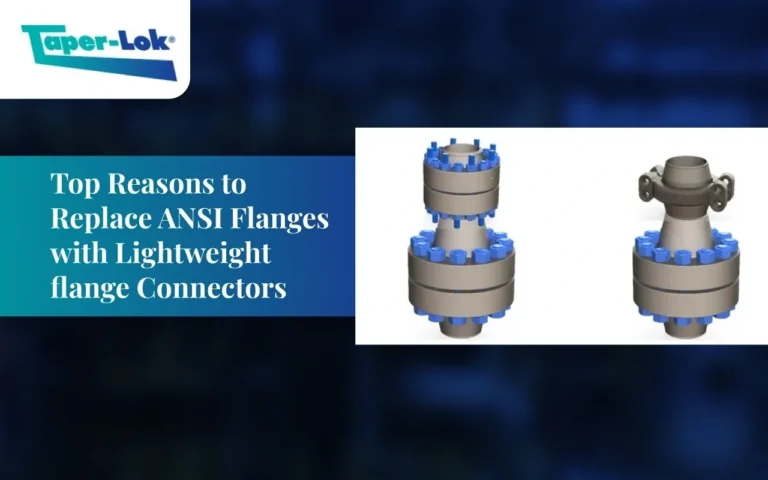
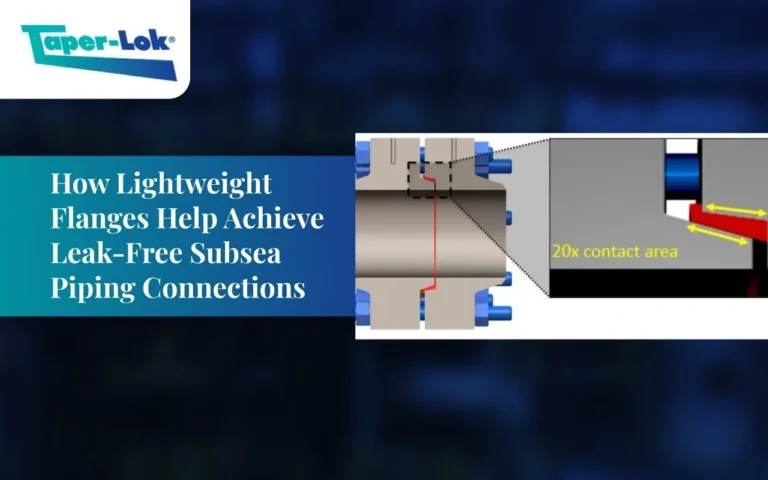
Lightweight flange connectors in refinery pipelines replace the gasket-dependent seal with a precision metal-to-metal taper geometry that creates a self-energizing connection. As system pressure increases, the seal tightens rather than weakening. There is no soft material to creep, harden, or corrode, and no bolt load relaxation working against the integrity of the joint.
The compact design also reduces the overall weight of each connection point significantly. Across a refinery piping network with hundreds of high-pressure flanged joints, that weight reduction relieves load on pipe supports, nozzles, and structural steel, contributing to longer service life across connected equipment.
For turnaround planning, the absence of gasket replacement at every connection point translates directly into shorter shutdown durations and lower parts and labor costs per outage.
Working With the Right Manufacturer
The performance of any metal-to-metal sealing connector depends entirely on the precision of its manufacture. Working with established refinery piping connector manufacturers who specialize in engineered connection systems ensures that tolerances, material grades, and pressure ratings are matched to the specific demands of refinery service. Taper-Lok, headquartered in Houston, Texas, has been supplying high-integrity connection systems to refineries, offshore platforms, and petrochemical facilities for decades, with a track record that speaks to both the technology and the engineering support behind it.
Replacing ANSI flange replacement in refinery pipelines is not a rip-and-replace exercise. It is a targeted upgrade applied where the cost of failure is highest, and the return on investment is most immediate.