Leak Prevention and Sealing Solutions for Industrial Operations
In industrial operations, a leak is never just a leak. It is a safety risk, a compliance issue, a production loss, and in severe cases, the trigger for a catastrophic failure. Refineries, offshore platforms, petrochemical plants, and subsea pipeline systems all share one common vulnerability: the integrity of their pipe connections. When those connections fail, everything downstream fails too.
Leak prevention in high pressure pipe connections is not a single action. It is a discipline that spans design choices, material selection, installation practices, and long-term maintenance strategy. This guide breaks down what actually works and why.
Understanding Where Leaks Come From
Most industrial pipe leaks originate at connection points, not along the pipe body itself. Flanged joints, threaded fittings, and mechanical couplings are all potential failure sites. The shared weakness across most of these is dependence on consumable sealing materials, gaskets, thread sealants, and elastomeric rings that degrade under pressure, temperature, vibration, and chemical exposure.
A gasket-sealed flange operating in a corrosive process service will cycle through expansion and contraction thousands of times over its service life. Each cycle relaxes the bolt load slightly. Each high-temperature excursion accelerates gasket creep. The connection does not fail on day one. It drifts toward failure gradually, and by the time a visible leak appears, the underlying degradation has been building for months.
Understanding this progression is foundational to any industrial pipe connection sealing strategy. You cannot inspect your way out of a design that is structurally inclined to fail.
Design-Level Leak Prevention
The most effective leak prevention decisions happen before a single bolt is tightened. Specifying the right connection type for the operating pressure, temperature range, fluid chemistry, and vibration environment determines how much ongoing maintenance the system will demand.
For critical service lines running hydrocarbons, aggressive chemicals, or high-temperature steam at elevated pressures, a gasketed connection is a liability from day one. Specifying metal-to-metal sealing connections at the design stage eliminates the consumable material entirely. A reliable seal for pipe connections in critical service should not depend on a component with a finite service life. It should be built into the geometry of the connection itself.
Installation Practices That Determine Long-Term Performance
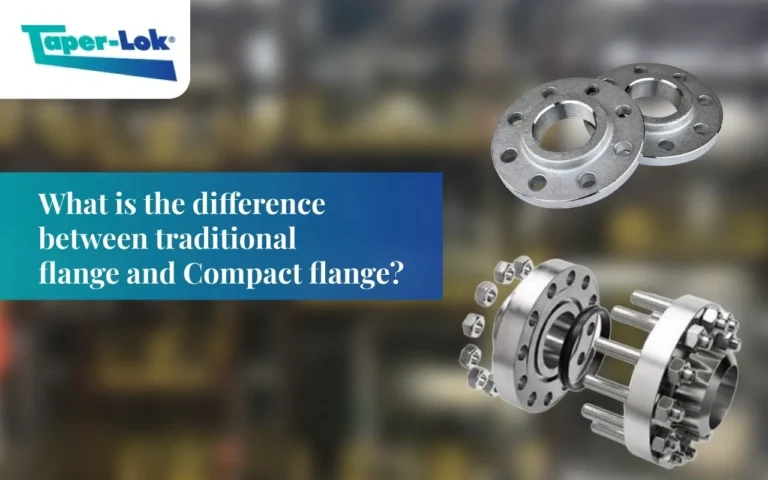
Even the best connection technology underperforms when installation is rushed. Pipe misalignment at assembly is one of the most common causes of premature joint failure. When flanges are pulled into alignment by bolt load rather than by proper pipe positioning, uneven compression creates immediate leak paths and adds bending stress that accelerates fatigue over time.
Bolt tightening sequence and torque control matter equally. Cross-pattern tightening in multiple passes ensures even load distribution across the flange face. Single-pass or circular tightening creates pockets of low contact stress that become leak initiation points under operating pressure. Proper torque verification is not a paperwork exercise. It is the difference between a connection that holds for decades and one that appears on the next shutdown inspection list.
Where Metal-to-Metal Sealing Changes the Equation
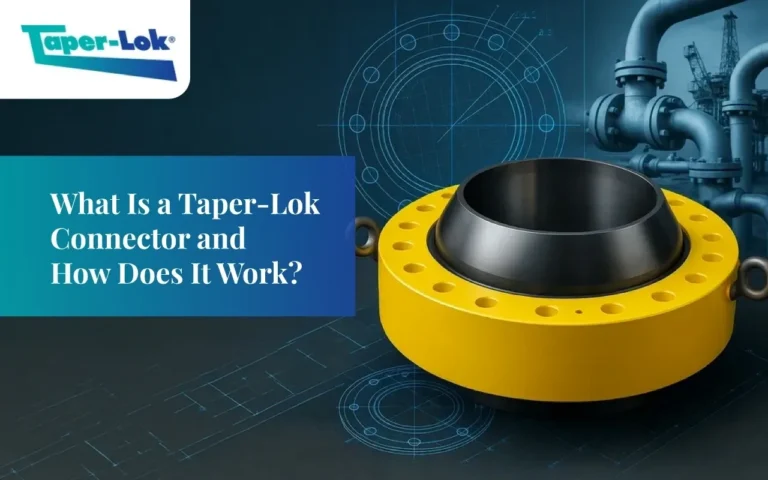
All conventional sealing strategies are ultimately managing a design limitation. Metal-to-metal sealing resolves it. Taper-Lok leak free pipe connectors use a patented taper geometry that draws two precision-machined metal surfaces together under controlled bolt load, creating a self-energizing seal. As internal pressure increases, the seal tightens rather than weakening. There is no gasket to replace, no soft material to extrude, and no consumable component driving a maintenance schedule.
The compact design also reduces flange weight by up to 80% compared to conventional ANSI flanges, cutting structural load on offshore platforms and reducing installation time in refineries and heat exchanger systems. Taper-Lok leak free pipe connectors are trusted across subsea pipelines, offshore topsides, petrochemical refineries, and aerospace systems globally, in environments where failure is not an acceptable outcome.
Building a Long-Term Leak Prevention Culture
Technology alone does not prevent leaks. The facilities with the best records combine the right connection systems with disciplined installation practices, thorough pre-commissioning inspection, and honest post-shutdown analysis when leaks do occur. Every leak points to a specific failure mode that can be engineered out of the next design cycle.
The goal of leak prevention in high pressure pipe connections is not just to fix today’s problem. It is to build systems that do not produce tomorrow’s.