What is a Taper-Lok Connector and How Does It Work?
If you work in oil and gas, petrochemical processing, or any industry that runs high-stakes piping systems, you already know that a single leak can shut down an entire operation. Standard flanged connections have been the go-to for decades, but they come with a long list of problems like gasket failures, bolt fatigue, frequent maintenance, and weight burdens that offshore platforms simply cannot afford to ignore.
That is where Taper-Lok connectors come in.
What is a Taper-Lok Connector?
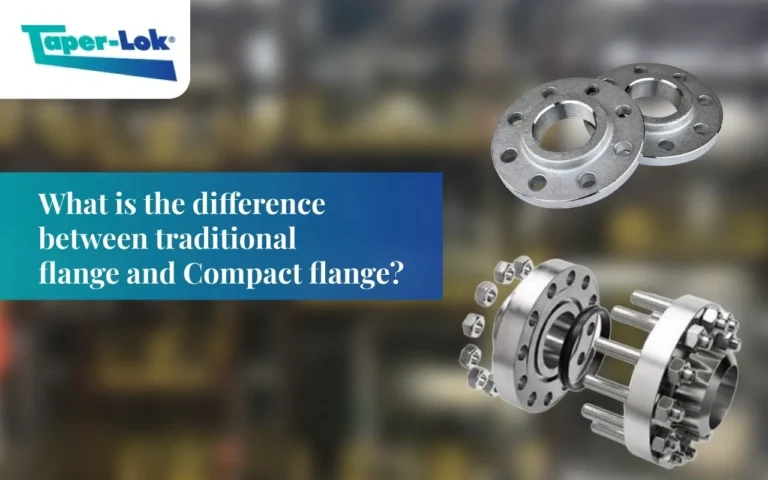
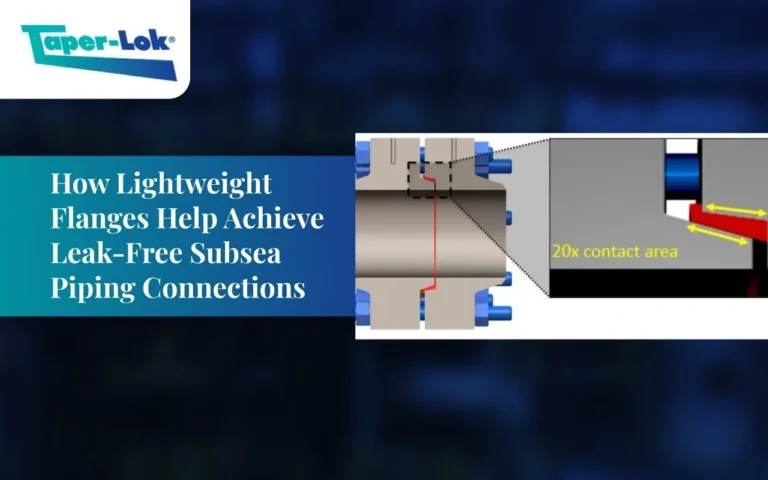
A Taper-Lok connector is a patented metal-to-metal sealing system designed to replace conventional ANSI and API flanged pipe connections. Unlike traditional flanges that rely on soft gaskets to create a seal, Taper-Lok uses precision-engineered taper geometry to lock two metal surfaces together with a level of integrity that is equivalent to a welded joint.
These are not just upgraded flanges. They are purpose-built industrial pipe connection systems that address the root causes of leaks rather than masking them with consumable sealing materials that degrade over time.
How Does the Taper-Lok Sealing Mechanism Work?
The core of the technology lies in the taper-seal geometry. When the connector is assembled, the male and female taper surfaces are drawn together under controlled bolt load. As the surfaces engage, the taper angle creates a radial sealing force that increases with internal pressure. The harder the system pushes, the tighter the seal gets.
This self-energizing behavior is what makes Taper-Lok a true high pressure metal sealing connector. It performs reliably at pressures up to 20,000 psi and across a temperature range from cryogenic levels all the way up to approximately 1,500 degrees Fahrenheit. No gasket. No elastomeric ring. No soft material waiting to fail.
The result is a leak-free pipe connector that does not require the same ongoing inspection cycles, retightening schedules, or periodic gasket replacements that plague standard flange systems.
Why Does Design Matter for Industrial Applications?
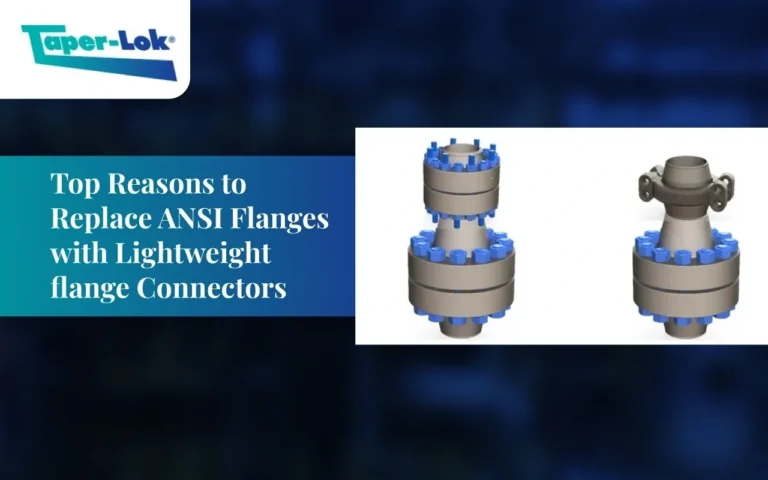
Standard ANSI and API flanges are bulky. They add significant weight to structures that are already pushing load limits, and on offshore floating platforms, that weight has a direct cost. Taper-Lok connectors are compact flange connectors that can weigh up to 80% less than their conventional counterparts. A single offshore topside replacement program using Taper-Lok technology can eliminate over one million pounds of structural load.
That reduction is not just about weight. Smaller connection footprints mean tighter, cleaner pipe routing, less material cost, and faster installation. In subsea and riser applications, Taper-Lok connectors install up to 75% faster than standard API flanges, which directly reduces diver time and offshore labor costs.
Where Are These Connectors Used?
Taper-Lok and the Coffer-Lok variant serve as high pressure pipe connectors across a wide range of demanding environments. Subsea risers and pipelines rely on them for their misalignment tolerance, since many configurations feature a spherical nose design that accommodates up to 2 to 3 degrees of pipe misalignment during installation. Petrochemical refineries use them in erosive and corrosive service lines where gasket-sealed flanges simply cannot hold up. Heat exchangers benefit from Taper-Lok seal rings on channel covers and tubesheets, with customers reporting savings of up to $400,000 per planned shutdown per exchanger.
Aerospace systems, cryogenic plants, and offshore topsides round out the application profile.
The Bottom Line
Taper-Lok connectors work because the design does not compromise. The metal-to-metal seal eliminates the weakest link in a traditional flanged system. The compact profile reduces cost and structural burden. The self-energizing taper geometry grows stronger as system pressure rises.
For engineers and plant managers who are tired of chasing leaks and scheduling unplanned shutdowns, Taper-Lok represents a fundamentally better way to make a pipe connection. The technology has been proven across thousands of connections worldwide, and its track record in the harshest operating environments speaks for itself.